By Raymond Ken-Mbata
25th August 2026

The Federal Government has recorded significant progress in Nigeria’s health sector since 2023 under President Bola Ahmed Tinubu’s Renewed Hope Agenda, with the Nigeria Health Sector Renewal Investment Initiative, NHSRII, providing the framework for a broad-based reform of the sector.
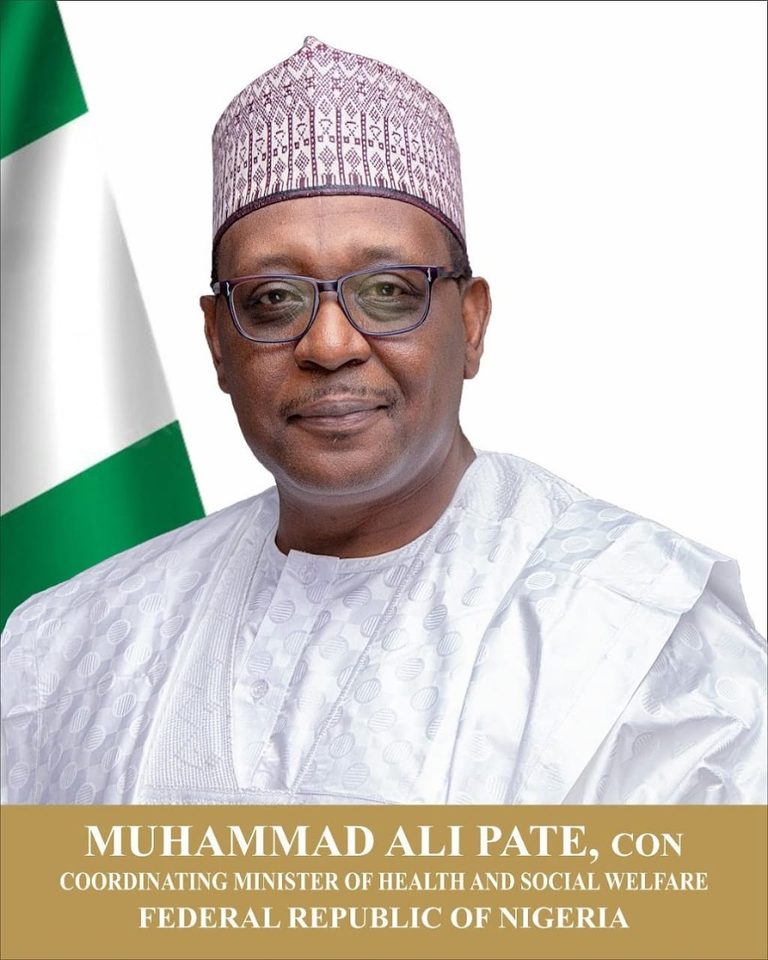
Led by the Coordinating Minister of Health and Social Welfare, Professor Muhammad Ali Pate, the initiative introduced a Sector-Wide Approach, known as SWAp, to bring federal and state governments, local authorities, the private sector and development partners together under a common national health agenda. By the third quarter of 2025, 84 percent of the key performance indicators under the Presidential Health Sector Renewal Compact had been achieved, covering governance, service delivery, health financing, workforce development and healthcare industrialisation.
A major achievement has been the establishment of a unified health reform framework built around “One Plan, One Budget, One Conversation and One Report.” The approach has helped reduce fragmentation, strengthen accountability and align health priorities across the country. By 2025, all 36 states and the Federal Capital Territory had aligned their Annual Operational Plans with the national health strategy.
The government has also strengthened health sector governance through the expansion of the Health Sector Renewal Compact, institutionalisation of State-level Joint Annual Reviews, performance-based monitoring and increased citizen participation in health decision-making. Ministerial oversight and accountability mechanisms have also been strengthened, while 35 states and the FCT had successfully conducted Health Sector Performance Dialogues by 2025.
Human resources for health have received increased attention, with the Federal Government approving the recruitment of more than 20,000 frontline health workers. The government also approved ₦50 billion for health worker arrears and allowances, alongside improved remuneration, welfare support, training and workforce retention initiatives aimed at addressing shortages and improving service delivery nationwide.
The administration has equally placed greater emphasis on developing Nigeria’s domestic pharmaceutical and vaccine manufacturing capacity. Through incentives for healthcare investors, support for local pharmaceutical and vaccine production, stronger supply chains and efforts to reduce dependence on imports, health has increasingly been positioned not only as a social service but also as an important driver of economic growth, job creation and investment.
At the institutional level, the SWAp Coordinating Office has emerged as the central coordination mechanism for the reforms. It has harmonised government and development-partner investments, introduced performance-tracking systems, coordinated implementation of the Presidential Health Sector Renewal Compact and strengthened monitoring and accountability across federal and state programmes.
The National Health Insurance Authority, NHIA, has meanwhile expanded health insurance enrolment and financial protection for vulnerable Nigerians. It has strengthened implementation of the Basic Health Care Provision Fund and advanced the Universal Health Coverage agenda through strategic purchasing mechanisms designed to improve access to healthcare while reducing out-of-pocket expenditure.
The National Primary Health Care Development Agency, NPHCDA, has also played a central role in the reform programme through the revitalisation of primary healthcare facilities nationwide. Its interventions include strengthening maternal and child health services, expanding routine immunisation, improving PHC infrastructure and equipment, and supporting the government’s objective of ensuring functional primary healthcare facilities across all wards.
Another major component of the reform is the Presidential Initiative for Unlocking the Healthcare Value Chain, PVAC, which has positioned healthcare as an important area of economic and industrial development. The initiative has created a healthcare investment pipeline exceeding $1.2 billion, engaged more than ten development finance institutions and supported the development of Nigeria’s first dedicated healthcare blended-finance vehicle.
PVAC has also advanced local pharmaceutical and medical device manufacturing and facilitated partnerships involving the Bank of Industry, African Development Bank, Nigeria Sovereign Investment Authority, European Investment Bank and other investors. A Presidential Executive Order removing duties and VAT on critical pharmaceutical manufacturing inputs has further supported the sector, while a $200 million Lafiya Fund has been developed to target healthcare small and medium-sized enterprises.
Emergency healthcare has also received attention through the National Emergency Medical Services and Ambulance System, NEMSAS. The programme has expanded emergency referral systems, improved ambulance coordination and strengthened emergency medical response capabilities. It has also supported the integration of emergency transportation with maternal and child health programmes and improved access to emergency treatment in underserved communities.
The Basic Health Care Provision Fund has similarly strengthened financing for primary healthcare facilities, expanded access to essential services and improved funding for vulnerable populations. The fund has also introduced stronger accountability for frontline healthcare spending and enhanced service delivery at community level, making it a key instrument in primary healthcare reform.
Another notable intervention is the National Health Fellows Programme, which has deployed National Health Fellows across all 774 Local Government Areas. The programme is strengthening local-level health governance, developing a new generation of reform-minded health leaders and supporting programme implementation and performance management nationwide. It has become one of the largest health leadership development programmes in Africa.
The Maternal Mortality Reduction Innovation Initiative, MAMII, has focused specifically on reducing maternal deaths through strengthened referral pathways for pregnant women, improved emergency obstetric response systems and increased attention to locations with a high burden of maternal mortality. The initiative has also improved coordination among federal, state and local stakeholders as Nigeria works to address one of the world’s highest maternal mortality burdens.
The reforms have also attracted international recognition. In 2025, Professor Muhammad Ali Pate was named to TIME Magazine’s TIME100 Health List in recognition of his contribution to health system reform, health equity and primary healthcare transformation.
Overall, the Renewed Hope Agenda in Health has shifted Nigeria’s health sector towards a more coordinated, performance-driven and investment-oriented system. The reported achievements include 84 percent implementation of Health Sector Renewal Compact targets, the recruitment of more than 20,000 health workers, nationwide adoption of coordinated health planning, deployment of National Health Fellows across all 774 LGAs, expanded primary healthcare reforms and strengthened health insurance coverage.
The mobilisation of more than $1.2 billion in healthcare investment opportunities, advancement of local pharmaceutical manufacturing and improved accountability and governance further highlight the scope of the reforms. Under President Bola Ahmed Tinubu’s leadership and Professor Muhammad Ali Pate’s stewardship, the initiatives are laying the foundation for a stronger, more resilient, more equitable and economically productive health system for Nigeria.
Raymond Ken-Mbata writes from Abuja
About the Author