By Raymond Ken-Mbata
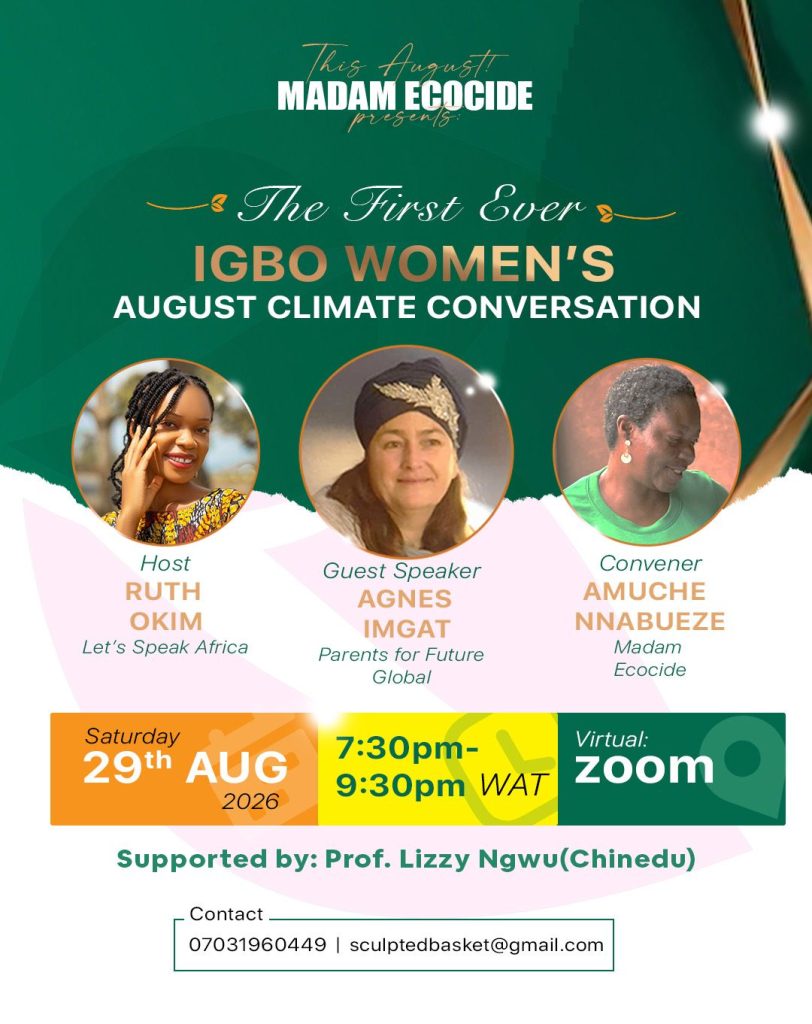
Climate change and environmental protection are gradually becoming part of community conversations among Igbo women, following a call by climate activist Dr. Amuche Nnabueze, popularly known as “Madam Ecocide,” for women to make climate justice part of their annual August meetings.
The call took centre stage at the First Igbo Women’s August Climate Conversation, held virtually on August 29, 2026, with academics, professionals, technocrats and climate advocates from Nigeria and other parts of the world taking part.
Organised by Parents for Future Nigeria, the meeting was deliberately timed to coincide with the annual Igbo Women’s August Return and Meetings. Participants discussed climate action, environmental protection, economic emancipation and cultural reawakening, with particular attention to what Igbo women can do in their homes and communities to protect the environment.
For Dr. Nnabueze, the conversation is rooted in the work she has been doing in her community of Ukehe. Her clanswomen gave her the name “Madam Ecocide” in recognition of her peaceful environmental protests, especially her campaigns against the indiscriminate felling of trees. Her protests have featured banners bearing the message, “STOP THE ECOCIDE.”
Nnabueze, an artist and climate activist at the University of Nigeria, Nsukka, is Co-Founder and Lead of Parents for Future Nigeria and a member of the Board of Trustees of PACTPAN Nigeria. Through art, community engagement and advocacy, she has continued to draw attention to environmental responsibility.
The August conversation offered another avenue for that work.

Participants said climate education should not remain confined to formal conferences but should become part of the community meetings people already attend. The organisers want climate justice to feature in August meetings across the five Igbo states, giving women an opportunity to discuss environmental problems in their communities and consider practical responses.
Among the issues proposed for discussion are clean energy and a just transition from fossil fuels, plastic pollution, air pollution, food security, climate adaptation, loss and damage, carbon footprints and the relationship between the Global North and Global South.
Participants are also expected to learn more about the Fossil Fuel Non-Proliferation Treaty and Plastics Treaty and, where possible, support the initiatives through community advocacy and signatures.
The meeting, which lasted from 7:30 p.m. to 9:00 p.m. on Zoom, was moderated by Ruth Reje, a member of Let’s Speak Africa and Students for Liberty, a spoken-word artist and public speaker who convenes the 14 Days of Climate Activism.
Agnes Imgart from Germany delivered the contemplation and keynote address. A mother of two and climate and children’s rights advocate, Imgart played a role in establishing the Parents For Future movement in Oldenburg and Germany and is a founding member and core organiser of Parents For Future Global.
She was also part of the global parents’ delegation to COP26 in Glasgow, where the group met with then COP President Alok Sharma.
Other members of the organising team were Professor Elizabeth Ngwu, Professor of Human Nutrition and a supporter of Parents for Future Nigeria; Ifeyinwa Anidi, based in the United Kingdom; Ngwu Afuluenu, who handled the graphics; and C.O.J. Urama, the digital consultant.
Participants included Christabel Nnabueze of PAU; Lady Nnenna Anidi of Australia; Lolo Maria Odonwodo of the United States; Professor Anthonia Achike of the University of Nigeria, Nsukka; and Dr. Uche Okonkwo of the University of Nigeria, Nsukka, among others.
The climate conversation, however, moved beyond the Zoom meeting.
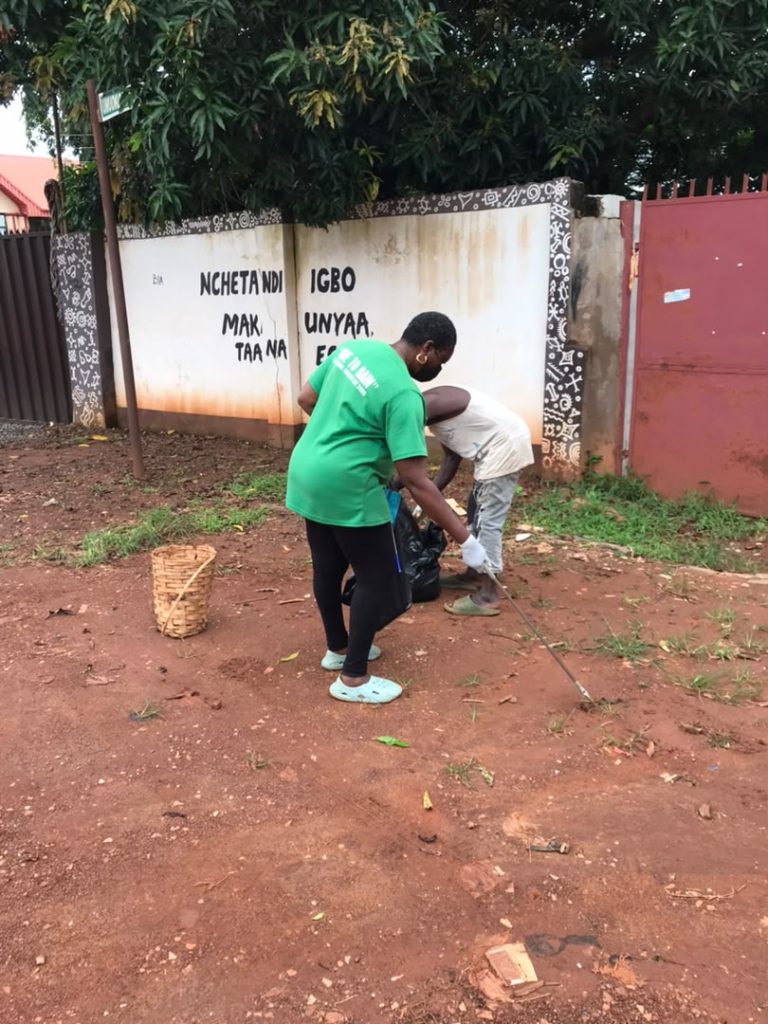
On September 20, 2026, Nnabueze and other environmental advocates joined activities marking World Cleanup Day.
The cleanup was held in the spirit of the Season of Creation of the Laudato Si Movement, whose theme was “Living Water.” World Cleanup Day was marked with the theme, “From Clean Plates to Clean Cities.”
Participants picked up plastics and other litter at Enugu, in Enugu State, along the route from Umuoji through the Centre for Memories and Ofuobi Africa Centre to Mmiri Ani.
According to Dr. Nnabueze, the exercise was rewarding, but it also exposed a more disturbing side of the environmental problem.
At Mmiri Ani, she observed what she described as serious human attacks on the living water, which supplies many people with water for their daily needs.
For “Madam Ecocide,” the experience brought the message of the August climate conversation closer to everyday life. Climate and environmental issues, she noted, are not just subjects for international conferences. They affect the water people drink, the air they breathe, the food they eat and the communities where they live.
She called on people living around water sources to take greater responsibility for protecting them and to embrace what she described as integral ecology — caring for the environment while also considering the needs of poor and vulnerable people.
Her message also extends to institutions and communities. She wants churches, streets and residential estates to develop better systems for providing waste bins and managing waste collection in ways that are environmentally friendly and sustainable.
For Dr. Nnabueze, the work continues — from the protest banner carrying “STOP THE ECOCIDE,” to the collection of plastic waste and the call to protect Mmiri Ani.
The message is straightforward: environmental protection must become part of everyday community life.
About the Author