
By Raymond Ken-Mbata
The Federal Government has reaffirmed its commitment to empowering pharmacists and strengthening pharmacy practice to improve access to safe, affordable and quality healthcare services across Nigeria.
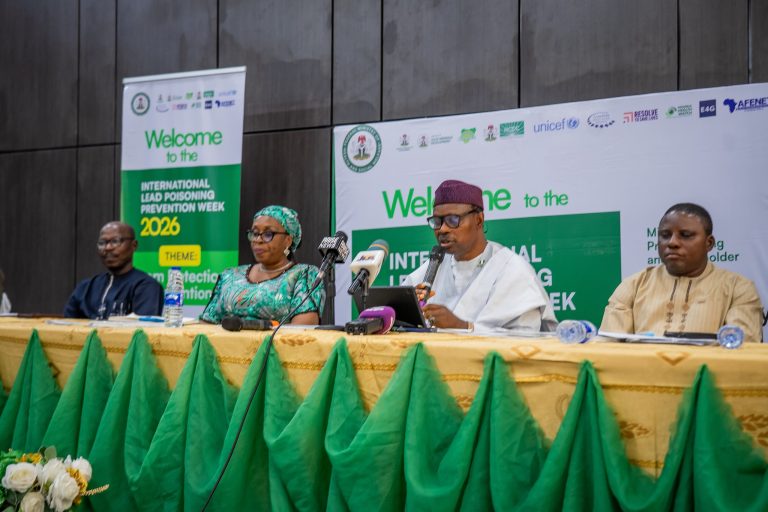
The Coordinating Minister of Health and Social Welfare, Prof. Muhammad Ali Pate, stated this on September 25, 2026, during a ministerial press briefing in Abuja to commemorate World Pharmacists Day 2026, themed “Empowering Pharmacists for Healthier Futures.”
Represented by the Director overseeing the Office of the Permanent Secretary and Director of Human Resource Management, Mrs. Tetshoma Dafeta, the minister described pharmacists as some of the most accessible frontline health professionals, highlighting their contributions to medicines supply, preventive care, chronic disease management, patient safety and the rational use of medicines.
He said the Federal Ministry of Health and Social Welfare was pursuing reforms in line with President Bola Ahmed Tinubu’s Renewed Hope Agenda to expand pharmacists’ roles in primary and specialised healthcare, promote regulated electronic pharmacy services and digital health platforms, support local pharmaceutical manufacturing, and strengthen enforcement against substandard and falsified medical products.
Pate noted that although the pharmacy sector had recorded progress in clinical integration, pharmacovigilance and pharmaceutical research, sustained investment in workforce development, pharmacy education, clinical residency programmes, continuous professional development, infrastructure and innovation remained necessary.
He also called for stronger collaboration among pharmacists, physicians, nurses and other healthcare professionals to improve patient outcomes, stressing that Nigeria’s health system required a well-equipped and adequately supported pharmacy workforce.
In her welcome address, the Director of Food and Drug Services, Mrs. Olufowubi-Yusuf Adeola, mni, said pharmacists played essential roles in promoting the safe and effective use of medicines, counselling patients, improving medication adherence and preventing harmful drug interactions and medication-related errors.
She explained that pharmacists’ accessibility within communities also positioned them to support public health interventions, including health education, vaccination awareness, antimicrobial stewardship and chronic disease management.
Adeola further emphasised the need to equip pharmacists with the skills, tools and professional support required to address emerging health challenges, including antimicrobial resistance, unsafe medication practices and the circulation of substandard and falsified medicines. She also highlighted the potential of telepharmacy and digital health technologies to improve access to pharmaceutical care.
The Director called for sustained collaboration among government institutions, regulatory agencies, healthcare professionals, development partners, the private sector and the media to strengthen pharmaceutical services and improve health outcomes.
In separate goodwill messages, representatives of key health institutions and development partners also reaffirmed their support for strengthening pharmacy practice and integrating pharmacists more effectively into Nigeria’s healthcare system.
The Director-General of the National Agency for Food and Drug Administration and Control (NAFDAC), Prof. Mojisola Christianah Adeyeye, represented by the Director of Greater FCT, Pharm. Mrs. Chizoba Maduagwuna, described pharmacists as indispensable members of the healthcare team.
She highlighted their contributions to the rational use of medicines, professional counselling and patient support, noting that access to medicines must be accompanied by assurances of safety, quality, effectiveness and proper use.
Similarly, the Director-General of the National Health Insurance Authority (NHIA), Dr. Kelechi Ohiri, represented by Yusuf Ibrahim, said pharmacists were critical to achieving Universal Health Coverage, as access to healthcare remained incomplete without access to safe, affordable and effective medicines.
He said the NHIA would continue to strengthen collaboration with pharmacists, optimise medicines formularies, improve reimbursement processes and integrate pharmaceutical care into its quality assurance frameworks.
The National Coordinator of the Presidential Initiative for Unlocking the Healthcare Value Chain (PVAC), Dr. Abdul Mukhtar, represented by Muhammed Balarabe, Head of Ecosystem Enablement, also underscored the importance of pharmacists to the growth and industrialisation of Nigeria’s pharmaceutical sector.
He said efforts to strengthen local pharmaceutical manufacturing required the active participation of pharmacists and other relevant stakeholders, assuring that PVAC would sustain collaboration with the profession to build a stronger healthcare value chain.
Representatives of Médecins Sans Frontières, Pharm. Adeola Adeyemo; SMOKO Nigeria Limited, Dr. Uchechukwu Lewis Nwokorie; and Results for Development, Pharm. Jeremiah Ilo, also commended pharmacists for their contributions to medicine safety, patient counselling, supply chain management and improved health outcomes.
Presenting the vote of thanks, the Director of Pharmaceutical Services, Pharm. Talatu Kassim, appreciated the Ministry, development partners and other stakeholders for their support, describing their contributions as an indication of a shared commitment to empowering pharmacists and strengthening the profession.
The commemoration reinforced the importance of pharmacists not only in dispensing medicines but also in patient safety, disease prevention, healthcare delivery and pharmaceutical manufacturing, with stakeholders calling for sustained investment and stronger partnerships to ensure that pharmaceutical services contribute more effectively to a healthier Nigeria
About the Author