By Raymond Ken-Mbata
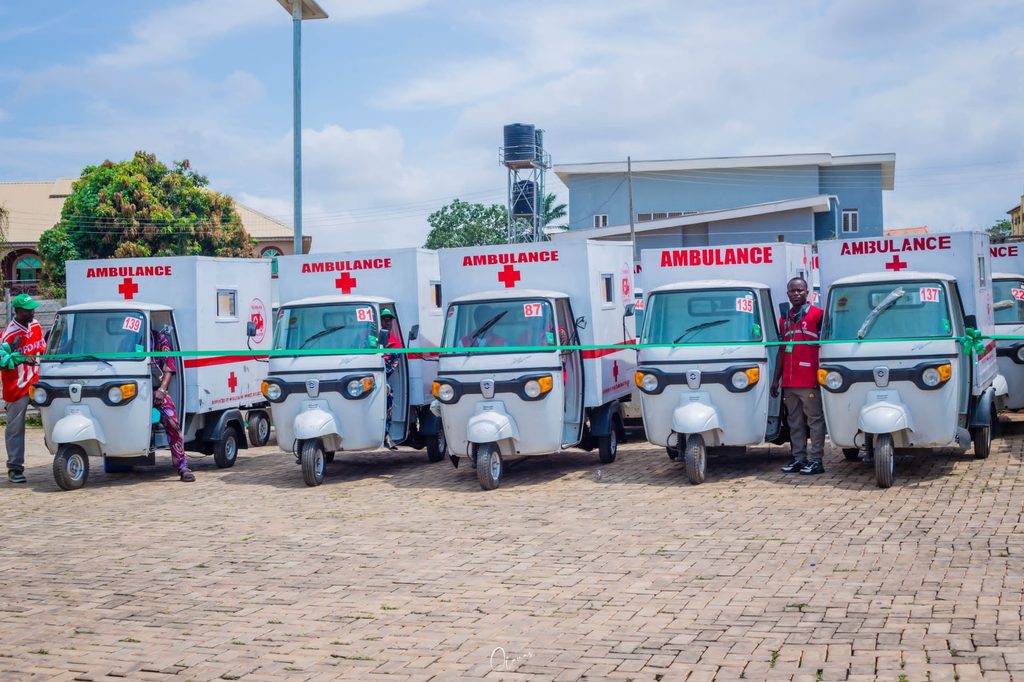
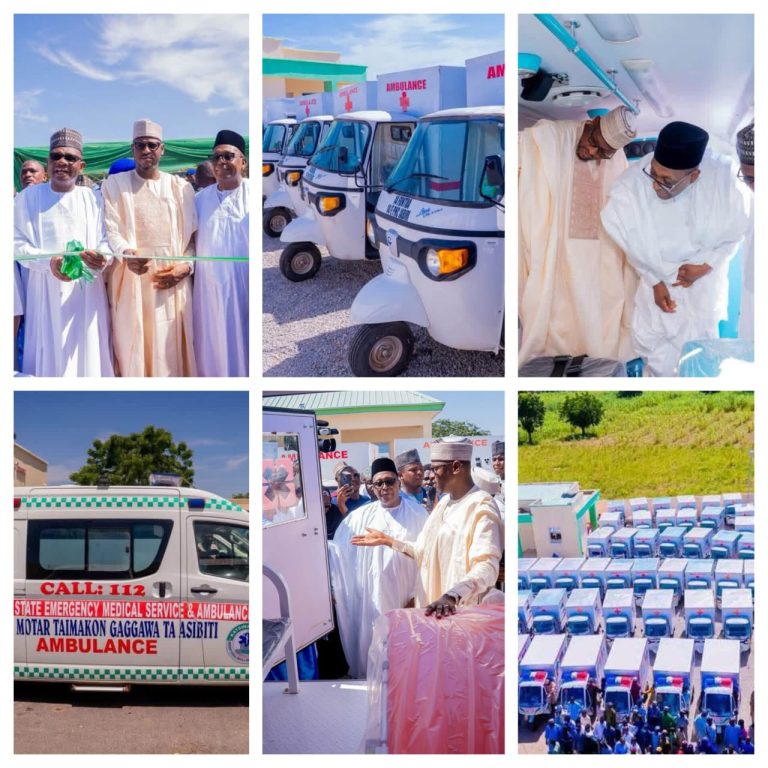
Abeokuta, September 9, 2026 — The Federal Government has deployed 13 ambulances to Ogun State to strengthen emergency medical services, improve pre-hospital care and facilitate faster access to life-saving treatment across the state. The deployment comprises three Advanced Life Support (ALS) ambulances, one Basic Life Support (BLS) ambulance and nine tricycle ambulances, targeted at tertiary hospitals and selected high-volume and hard-to-reach healthcare facilities. The development was contained in a statement signed by Ado Bako, Assistant Director, Information and Public Relations, Federal Ministry of Health and Social Welfare, on the 4th of September 2026.
The Minister of State for Health and Social Welfare, Dr Iziaq Adekunle Salako, disclosed this in Abeokuta during the flag-off and distribution of the ambulances under the National Emergency Medical Services and Ambulance System (NEMSAS). He said the intervention was part of President Bola Ahmed Tinubu’s Renewed Hope Agenda to strengthen emergency medical transportation, first-responder capacity, communication systems and emergency-care coordination nationwide. Dr. Salako said the Federal Government had acquired 145 tricycle ambulances, six boats, 15 BLS ambulances and 79 Advanced Life Support ambulances as part of the first phase of a national effort to strengthen Nigeria’s emergency medical services system.
According to the Minister, Ogun State’s allocation would serve Federal and State tertiary institutions, including the Federal Medical Centre, Abeokuta, and Olabisi Onabanjo University Teaching Hospital, as well as selected high-volume secondary and primary healthcare facilities in remote locations. He said NEMSAS and the Maternal Mortality Reduction Innovation Initiative had enabled more than 48,000 women to receive free emergency obstetric care, while over 4,000 women had benefited from free caesarean sections in NHIA-empanelled facilities. He attributed a 17 per cent reduction in maternal deaths and a 12 per cent reduction in newborn deaths across 172 high-burden Local Government Areas partly to these interventions.
Dr. Salako explained that effective emergency medical services went beyond simply providing ambulances, stressing that survival in critical situations depended on rapid stabilisation, safe transportation, appropriate referral and prompt access to definitive hospital care. He directed the Ogun State Government and beneficiary facilities to ensure proper deployment, maintenance, monitoring and accountability for the vehicles, while providing the necessary operational and maintenance funding. He warned that the ambulances must be restricted to designated emergency medical duties and must not be diverted to transporting corpses, purchasing drugs and hospital consumables or undertaking other non-emergency activities.
The Minister further disclosed that the Federal Government would collaborate with the legislative arm and other stakeholders to address the fragmented regulatory framework governing first responders and emergency management in Nigeria. He said NEMSAS and relevant government agencies would continue working towards a unified system linking emergency dispatch, pre-hospital care, transportation and receiving hospitals. Dr. Salako also revealed that his office had received complaints and media reports alleging unprofessional conduct, dereliction of duty and illegal collection of levies by some officials at FMC Abeokuta. He assured that the allegations would receive comprehensive attention and that anyone found culpable would be sanctioned in accordance with the Public Service Rules.
Dr. Salako called for stronger collaboration among the Federal and Ogun State governments, healthcare facilities, emergency responders, security agencies, private-sector stakeholders and communities to establish an emergency medical system that is accessible, coordinated, equitable, resilient and sustainable. He said the success of the intervention would ultimately be determined by its capacity to save lives and improve the experience of Nigerians requiring urgent medical attention. The deployment, he added, was part of the Federal Government’s broader effort to build a more responsive emergency-care system in which ambulances, trained personnel, communication infrastructure, referral pathways and hospitals function as interconnected components of national healthcare delivery.
About the Author