By Raymond Ken-Mbata
The Federal Government has called for increased private-sector investment in eye care, warning that preventable vision loss continues to affect millions of Nigerians and undermine education, productivity and economic development.
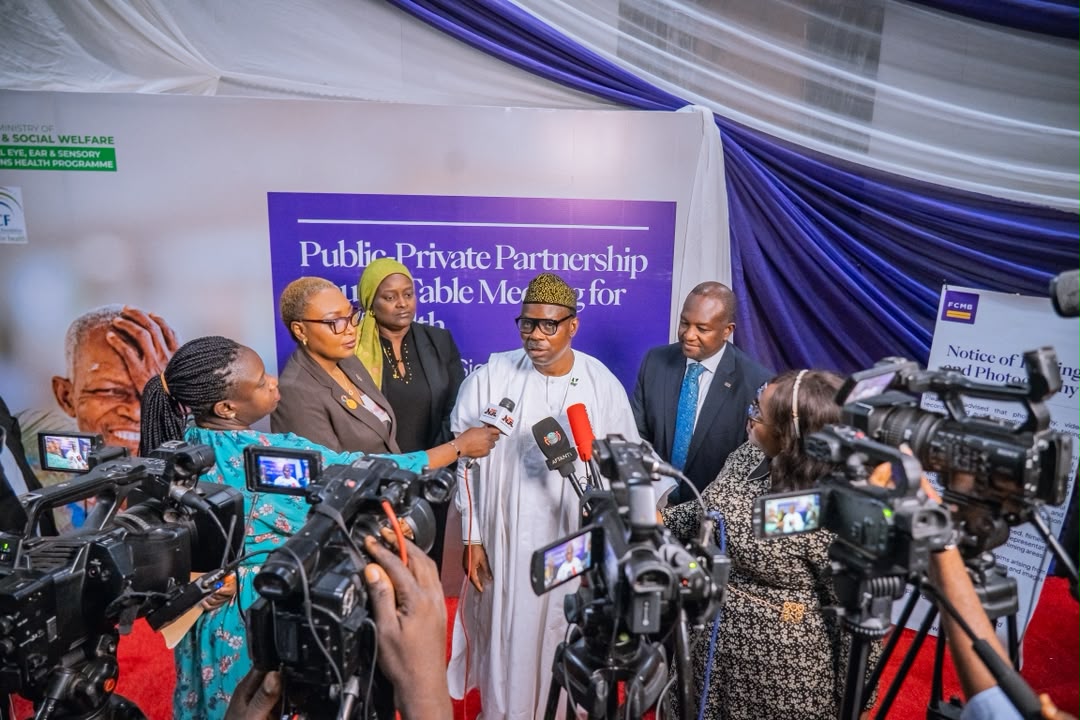
The Minister of State for Health and Social Welfare, Dr. Iziaq Adekunle Salako, made the call at a public-private sector roundtable on eye health in Abuja, themed “GIFT of Sight: Mobilising Partnerships and Sustainable Funding towards Transforming Eye Care in Nigeria.”
Salako said about 24 million Nigerians live with vision loss, much of which is linked to preventable or treatable conditions such as cataracts, glaucoma and uncorrected refractive errors. He urged businesses in banking, telecommunications, manufacturing, energy and other sectors to regard investment in eye health as both a social responsibility and an economic opportunity.
He encouraged companies to support school eye-health programmes, rural surgical outreaches and community-based eye-care centres through corporate social responsibility initiatives. He also called for innovative financing arrangements and greater use of digital technology to expand remote screening and access to specialist eye-care services.
The minister further urged Nigerian manufacturers to invest in producing spectacle frames, lenses, ophthalmic medicines and other essential supplies locally, noting that domestic production could reduce costs, create jobs and strengthen supply chains.
Highlighting government interventions, Salako said the JigiBola 2.0 initiative had delivered more than two million free eye screenings and 1.5 million free spectacles, trained over 2,200 primary healthcare workers and activated more than 800 primary healthcare centres for basic eye-care services across 16 states.
He added that the next phase would extend services to an additional 10 states, while the Renewed Hope Health Connect initiative was targeting 25,000 free cataract surgeries by 2027.
The minister commended First City Monument Bank and the Tulsi Chanrai Foundation for their longstanding partnership, which he said had reached more than 400,000 Nigerians through eye-care interventions.
Earlier, the Managing Director of FCMB, Mrs. Yemisi Edun, represented by Dr. Diron Olojo, said preventable visual impairment affected not only individuals but also families and communities, particularly where access to trained personnel, equipment and treatment remained limited.
She said the bank’s Priceless Gift of Sight Initiative, launched in 2009 in partnership with the Tulsi Chanrai Foundation, had provided eye testing, optical services, surgeries and disease management to hundreds of thousands of Nigerians.
Edun urged stakeholders to identify communities with the greatest unmet needs, establish sustainable financing arrangements and develop measurable targets for evaluating the impact of eye-care interventions.
The National Coordinator of the National Eye, Ear and Sensory Functions Health Programme, Dr. Oteri Okolo, described vision as fundamental to human dignity, learning, employment and social participation. She said Nigeria was integrating eye care into its wider health system through the National Eye Health Policy and Strategic Plan, with Integrated People-Centred Eye Care supporting efforts to advance Universal Health Coverage.
Representatives of eye-health organisations also called for stronger partnerships and sustainable funding. Mimansa Shulala of the Vision Care for Development Foundation said the foundation, with support from partners including Sterling Oil and the Tulsi Chanrai Foundation, had screened more than 17,000 people over two and a half years and facilitated more than 1,500 cataract and pterygium surgeries.
The roundtable brought together government officials, healthcare providers, businesses, foundations and development partners to explore practical ways of expanding affordable eye care. Stakeholders emphasised that sustained financing, stronger local capacity and coordinated interventions would be necessary to ensure that preventable vision loss did not continue to limit the opportunities available to Nigerians.
About the Author