
20th May 2026
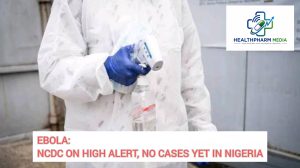
ABUJA – The Nigeria Centre for Disease Control and Prevention, NCDC, has heightened nationwide surveillance following fresh Ebola Virus Disease outbreaks in the Democratic Republic of Congo and neighboring Uganda.
In a public health advisory issued Sunday, NCDC Director-General Dr. Jide Idris confirmed that Nigeria currently has no confirmed case of Ebola, but warned that increased regional travel poses a risk.
The agency said it is working with Port Health Services, the Federal Ministry of Health and Social Welfare, and international partners to strengthen screening at airports, seaports and land borders, and to reinforce infection prevention in hospitals.

The regional situation escalated after World Health Organisation (WHO) declared the outbreak a “public health emergency of international concern” on May 17, 2026. Over 300 suspected cases and 88 deaths have been reported in DRC’s Ituri Province, driven by the rare Bundibugyo strain which has no approved vaccine or treatment. Cases have now spread to Kinshasa and across the border to Uganda’s capital Kampala, where two cases have been confirmed. Health experts note the Bundibugyo variant carries a 25-40% fatality rate and is spreading in a conflict zone with weak health infrastructure and porous borders.
Nigerian authorities are tightening controls in response. The Nigerian Civil Aviation Authority issued a circular on May 18 directing airlines to reinforce disease surveillance and passenger screening. Pilots must report suspected communicable disease cases onboard, while flight crews must submit health declaration forms and hand passenger locator forms to Port Health officials on arrival. Nigerian scientists have also called for emergency border surveillance, dedicated screening lanes for travelers from outbreak zones, and immediate reactivation of isolation centers and rapid response teams in all states to prevent a repeat of past continental outbreaks.
Globally, the U.S. government has mobilized support while limiting entry. The U.S. State Department said Washington is coordinating with CDC and partners to fund up to 50 treatment clinics in DRC and Uganda and is leveraging $1.7 billion in health partnerships under the “America First Global Health Strategy” to strengthen surveillance and frontline health workers. CDC has also deployed resources for contact tracing and lab testing, and on May 18 invoked Title 42 to temporarily restrict non-U.S. travelers from DRC, Uganda and South Sudan for 30 days. NCDC advises Nigerians to stay calm, practice strict hand hygiene, avoid contact with bodily fluids and bushmeat, and report unusual illness to the nearest health facility.
For Health Pharm Media, Raymond Ken-Mbata reporting.
About the Author