
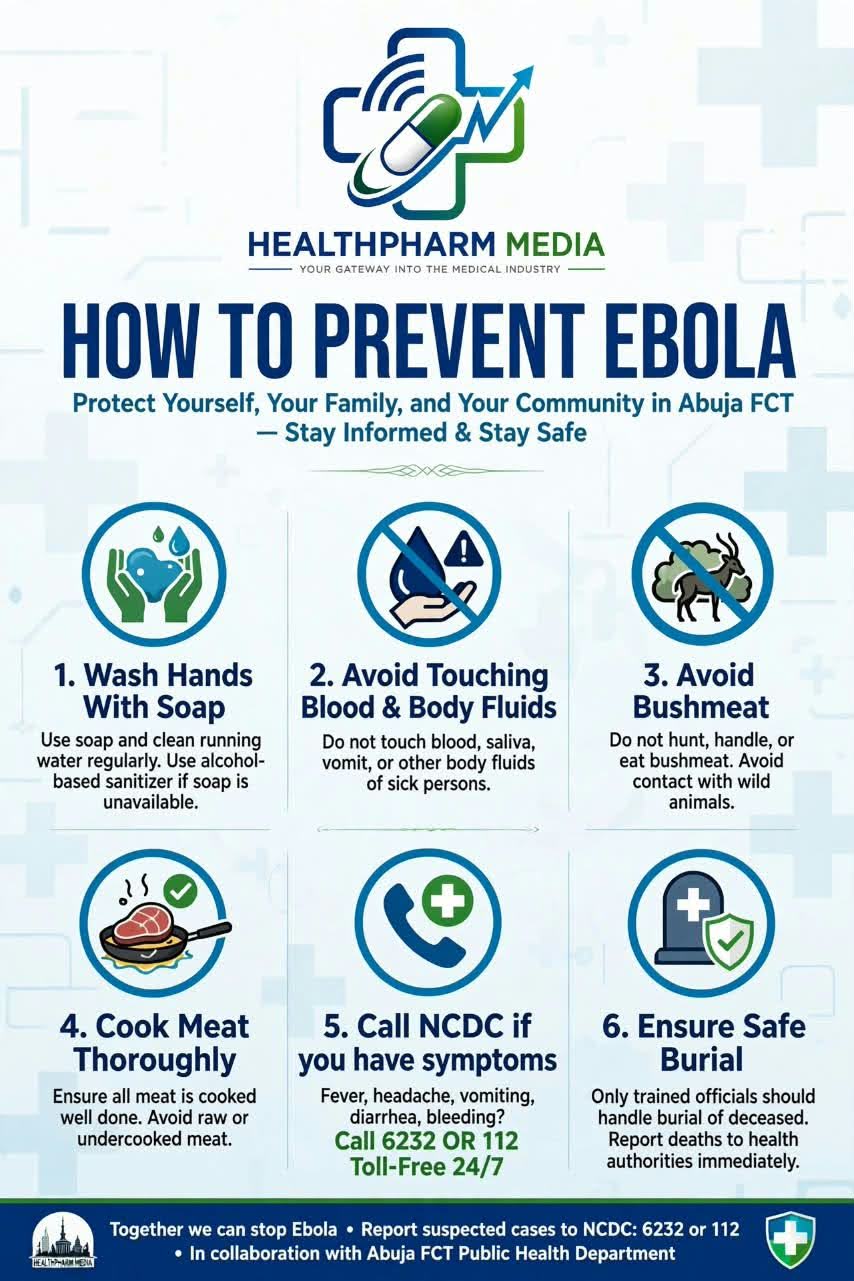
1. Avoid contact with blood and body fluids
Do not touch the blood, vomit, stool, urine, saliva, sweat or other body fluids of a person suspected of having Ebola. Avoid touching the bodies of people who may have died from the disease.
2. Maintain good hand hygiene
Wash your hands regularly with soap and running water. If these are not available, use an alcohol-based hand sanitiser.
3. Use protective equipment
Healthcare workers should wear appropriate protective equipment, including gloves, masks, gowns and eye protection, when caring for suspected or confirmed Ebola patients. Used gloves must not be reused. Surfaces should be cleaned and disinfected using approved products and procedures.
4. Avoid contact with infected animals
Do not handle or eat bats, monkeys or other wild animals suspected of carrying the virus. Avoid contact with animals found dead in the bush, and ensure meat is properly cooked before consumption.
5. Practise food and water safety
Wash fruits thoroughly, cook food properly and maintain good food hygiene. Avoid food prepared by people who are sick and suspected of having Ebola.
6. Recognise the symptoms and report early
Watch out for symptoms such as sudden fever, severe headache, muscle pain, vomiting, diarrhoea and unexplained bleeding.
If you develop these symptoms after possible exposure to Ebola, seek immediate medical advice. Contact the relevant health authorities and follow their instructions. Do not attempt to treat yourself at home or visit a healthcare facility without first informing them of your suspected exposure.
In Nigeria, you can contact the following emergency lines for guidance:
NCDC toll-free line: 6232
General emergency number: 112
7. Ensure safe burial practices
Do not touch, wash or prepare the body of someone suspected of dying from Ebola. Contact the relevant health authorities and allow trained personnel to handle the burial safely.
8. Prevent transmission and avoid stigmatizing patients
During an outbreak, avoid direct contact with anyone suspected of having Ebola until they have been assessed by health professionals. Follow public health advice on physical contact and other precautions.
Anyone showing symptoms should receive prompt medical attention. Treat affected individuals and their families with dignity and compassion. Avoid spreading rumours or discriminating against people because of suspected exposure.
Early reporting, proper hygiene and responsible behaviour can help prevent the spread of Ebola.
About the Author